What happens if you ignore vein disease
Many people live with vein symptoms for years before seeking evaluation. They put it off because the symptoms seem manageable, because they assume the problem is cosmetic, or because they are not sure treatment is necessary. What they often do not realize is that untreated venous insufficiency tends to worsen over time, and the cost of that delay is measured in more complex treatment, longer recovery, and in some cases permanent changes that cannot be fully reversed.
The progression most patients do not expect
Vein disease does not stand still. The underlying problem, failing vein valves that allow blood to pool in the lower leg, creates a pressure environment that slowly damages surrounding tissue. Most patients experience this as a gradual worsening of symptoms that they attribute to aging rather than a treatable condition. Here is what the progression typically looks like:
- Early stage: Mild leg aching and heaviness, occasional swelling by day's end, and visible spider or varicose veins. Easy to dismiss, not yet significantly interfering with daily life.
- Moderate stage: Persistent swelling in the lower leg that does not fully resolve overnight. More significant aching and fatigue after standing. Visible varicose veins becoming larger. Night discomfort increasing.
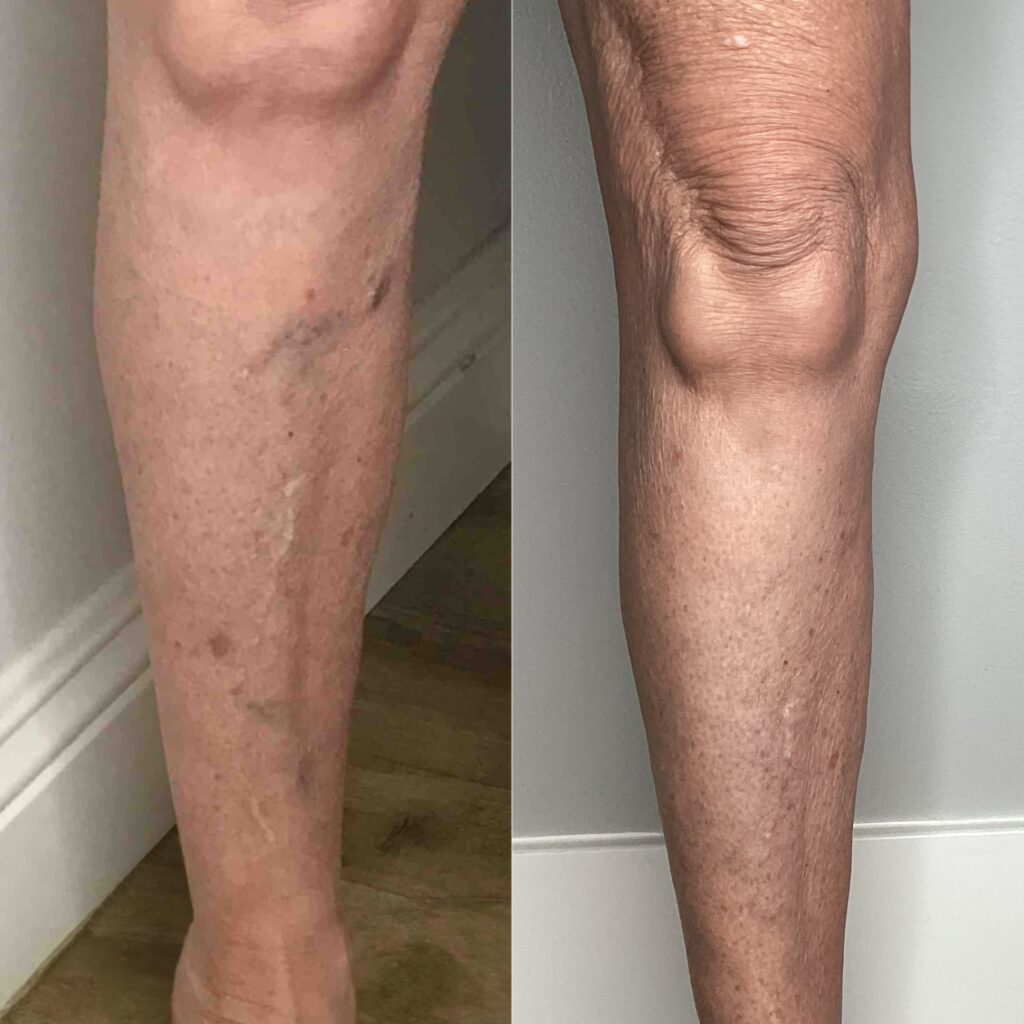
- Advanced early stage: Skin discoloration around the inner ankle (brownish staining from hemosiderin deposits). Itching and scaling of the lower leg skin. The body is showing the effects of years of elevated venous pressure on skin tissue.
- Advanced stage: The skin around the lower leg becomes thickened, firm, and leathery (lipodermatosclerosis). The affected tissue loses its normal healing capacity. Minor wounds in the area become slow to heal.
- Critical stage: An open wound develops on the inner ankle or lower leg (venous ulcer). These wounds require wound care in addition to vein treatment, are slow to heal, prone to infection, and carry a significant impact on quality of life and mobility.
What you lose by waiting: a comparison
| Disease stage at treatment | Treatment complexity | Expected outcomes | Reversibility of changes |
| C2 (varicose veins, symptomatic) | One to two in-office sessions | Excellent symptom relief; full visual improvement | High: no permanent tissue damage yet |
| C3 (edema) | One to three sessions; compression support | Good symptom relief; swelling typically resolves | Good: tissue changes are functional, not structural |
| C4 (skin changes) | Multiple sessions; more involved follow-up | Symptom improvement; skin changes may partially stabilize | Partial: skin discoloration and thickening may persist |
| C5-C6 (ulcer) | Vein treatment plus wound care coordination | Ulcer healing possible; recurrence risk remains elevated | Limited: tissue damage and scarring remain after healing |
Why patients wait and what breaks the cycle
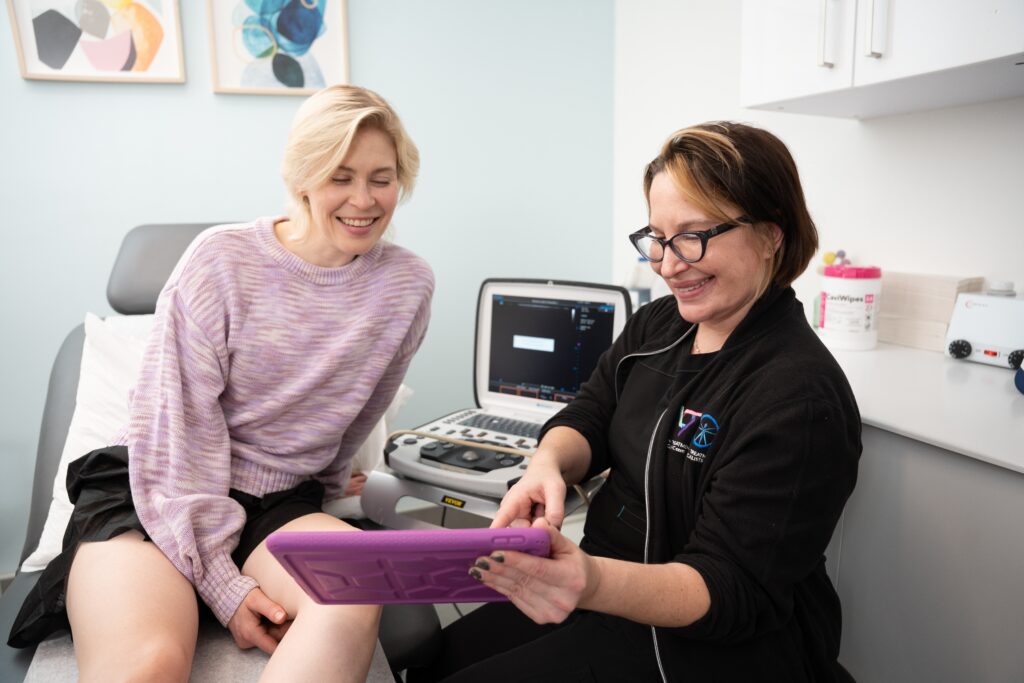
The most common reasons patients give for delaying evaluation are: "I thought it was just cosmetic," "I thought I would have to have surgery," and "I did not think it was serious enough." Each of these is addressed by a straightforward consultation. Our team can determine within a single appointment whether your situation is cosmetic or medical, surgical or treatable with an in-office procedure, and serious or early-stage. The consultation is not a commitment to treatment. It is information.
When vein symptoms require emergency care
Most vein symptoms build gradually over months to years and can be addressed through a scheduled evaluation. However, one presentation requires immediate emergency care rather than a clinic appointment: sudden severe swelling, warmth, and pain in one leg developing over hours, particularly in the absence of obvious injury. These are the symptoms of deep vein thrombosis (DVT). DVT carries a risk of pulmonary embolism, a clot traveling to the lungs, which is life-threatening. Go to the emergency room immediately. Do not attempt to schedule a vein clinic appointment for these symptoms.
Superficial thrombophlebitis, a painful firm cord along the course of a varicose vein with localized redness and tenderness, is a different situation. It is painful but typically localized, not a systemic emergency, and warrants a same-day or next-day evaluation at our clinic rather than an ER visit. When in doubt, a call to our team can help you determine the appropriate response.
The follow-up commitment for long-term results
Patients who begin treatment and follow through with follow-up appointments at 1, 3, 6, and 12 months after their procedure consistently achieve better long-term results than those who do not. The follow-up schedule exists because treated veins need to be confirmed as closed, because new disease can develop in other vessels over time, and because early identification of new disease allows for simple, targeted re-treatment rather than waiting for the cycle to advance again.
If you have been putting off a vein evaluation, the best time to begin is before symptoms advance further. Schedule your evaluation with our Pennsylvania team. Read about how vein disease progresses and whether varicose veins are dangerous for more background on what untreated disease looks like over time.
Starting treatment after years of delay
Patients who have been living with vein symptoms for years sometimes express concern that it is "too late" to benefit from treatment. In the vast majority of cases, this is not true. Even patients with C3 or C4 stage disease benefit significantly from treatment: symptoms improve, progressive tissue damage is halted, and the risk of advancing to venous ulceration is substantially reduced. What changes with longer delay is the complexity of the treatment course and the degree of reversibility of existing tissue changes. Treatment at C4 requires more sessions and produces less complete reversal of skin changes than treatment at C2. But it produces meaningful benefit, and it prevents the worst outcomes.
If you have been living with vein symptoms for many years and are finally considering evaluation, you are doing the right thing by considering it now rather than later. Our team evaluates patients at every stage of disease and develops a realistic treatment plan based on your current clinical picture, not a comparison to what might have been possible earlier. The most important step is simply starting.
Frequently asked questions
Is it true that varicose veins are not a concern if they are not painful?
Pain is not the only indicator of clinically significant vein disease. Some patients with substantial venous insufficiency on duplex ultrasound report relatively mild symptoms. Asymptomatic or mildly symptomatic varicose veins can still be driving progressive venous pressure damage beneath the surface. Symptom absence is not the same as disease absence.
At what point does ignoring vein disease become dangerous?
The C4 stage, when skin changes appear, represents a meaningful escalation. Lipodermatosclerosis and skin discoloration indicate that the underlying pressure has been causing tissue damage long enough to produce structural changes. At this point, untreated disease is on a path toward ulceration. C4 is the threshold after which delay becomes more consequential.
My varicose veins have been stable for years. Why should I treat them now?
Apparent stability in visible veins does not mean that underlying venous insufficiency has not progressed. Duplex ultrasound findings can change over time even when visible changes appear stable. Additionally, the cumulative venous pressure on surrounding tissue continues even during visually stable periods.
Can venous ulcers be treated?
Yes. Venous ulcers require a combination of wound care and treatment of the underlying venous insufficiency causing them. Vein treatment is essential because without eliminating the elevated venous pressure, the wound environment does not support healing. Most venous ulcers heal with combined wound care and vein treatment, but the process takes longer than earlier-stage disease and the tissue changes remain after healing.
Can vein disease cause serious complications if ignored for many years?
Yes. The most serious complication of long-term untreated venous insufficiency is venous ulceration. Open wounds on the lower leg that develop from advanced venous disease are slow to heal, prone to recurrent infection, and can significantly limit mobility and quality of life. These outcomes are largely preventable with earlier evaluation and treatment. Even patients presenting at C4 with established skin changes benefit substantially from intervention compared to continuing to wait.