Why vein treatment is non-surgical
If you have been avoiding vein evaluation because you assume treatment means surgery, this article is for you. Vein surgery (the historical procedure called vein stripping) has largely been replaced by minimally invasive, in-office treatments that are fundamentally different in how they work, how they feel, and how quickly patients recover. The shift to non-surgical vein care is one of the most significant changes in vein medicine over the past two decades.
What non-surgical means in vein care
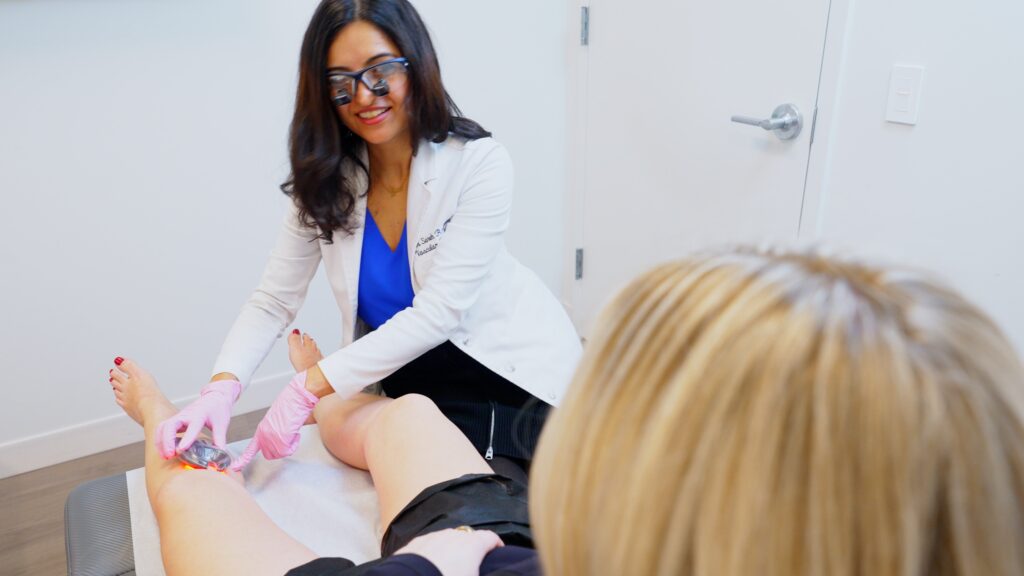
Non-surgical in the context of vein treatment means that procedures are performed without general anesthesia, without surgical incisions, and without hospitalization. Treatments are delivered through very small entry points (the width of a catheter or needle) under local anesthesia. Patients are fully awake throughout the procedure, drive themselves home in most cases, and return to normal activities within 24 hours. This is a fundamentally different experience from surgical vein stripping, which required operating room time, general anesthesia, multiple incisions, significant bruising, and weeks of limited activity.
How minimally invasive procedures work
Each non-surgical vein treatment works by closing the failing vein from the inside. The primary minimally invasive treatments are:
- Radiofrequency ablation (RFA): A thin catheter delivers radiofrequency energy inside the failing vein, causing it to collapse and seal. Used to close the great or small saphenous vein and eliminate the primary reflux source. Blood naturally reroutes through healthy veins nearby.
- Sclerotherapy: A sclerosant solution is injected directly into varicose or spider veins with a fine needle, causing the vein walls to seal together and the vein to be gradually reabsorbed. Often used after underlying saphenous reflux has been addressed.
Other minimally invasive options that may be part of your plan depending on your ultrasound findings and anatomy include:
- Endovenous laser treatment (EVLT): Uses laser energy through a catheter approach to achieve closure similar to RFA, suited to certain vein anatomies.
- ClariVein: A rotating catheter tip combined with a sclerosant solution closes the vein through both mechanical and chemical mechanisms. Useful for tortuous anatomy or shorter incompetent segments.
- Ultrasound-guided procedures: Sclerotherapy or other agents delivered to deeper veins under real-time ultrasound guidance for precision in veins not accessible by surface treatment.
Non-surgical vs surgical: a comparison
|
Feature |
Surgical vein stripping (historical) |
Modern non-surgical treatment |
|
Setting |
Hospital operating room |
Office or clinic |
|
Anesthesia |
General or spinal |
Local anesthesia only |
|
Incisions |
Multiple surgical incisions |
Small needle or catheter entry points only |
|
Procedure time |
1-2 hours in operating room |
30-60 minutes in clinic |
|
Recovery time |
2-4 weeks off work |
Return to normal activities same day |
|
Scarring |
Visible scars from incisions |
No significant scarring |
|
Pain level |
Significant post-operative pain |
Minimal discomfort during and after |
|
Long-term outcomes |
Equivalent to minimally invasive |
Equivalent with faster recovery |
The VeinVanish™ approach
Our Pennsylvania clinics deliver non-surgical vein care through the VeinVanish™ methodology, a structured approach that selects and sequences the right minimally invasive procedures based on each patient's specific venous anatomy as mapped by duplex ultrasound. The goal is complete, lasting elimination of reflux through the most appropriate non-surgical techniques, individualized to each patient's case rather than applied as a single default procedure.
Who is a candidate for non-surgical treatment?
The vast majority of patients with varicose veins and venous insufficiency are candidates for non-surgical treatment. Very rare anatomical situations may require surgical input, but for the common presentations of saphenous vein incompetence, varicose vein clusters, and spider veins, non-surgical options are clinically equivalent to surgery in outcomes and substantially superior in recovery experience.
If concern about surgery has been keeping you from seeking an evaluation, there is no reason to wait. Learn what your first consultation involves. Read about recovery after non-surgical treatment. Learn how our team coordinates your care.
Why non-surgical treatment produces durable results
A common question from patients who learn that modern vein procedures are minimally invasive is whether less-invasive treatment means less-durable results. The answer, supported by clinical trial data, is no. Long-term follow-up studies comparing endovenous thermal ablation to surgical vein stripping show equivalent or better closure rates and symptom relief over five to seven years. The durability of thermal ablation is explained by the mechanism: radiofrequency or laser energy delivered precisely to the vein wall produces permanent fibrous obliteration of the treated vein. The treated vein is closed to blood flow, and the body's reabsorption process proceeds over the following months. Recanalization can occur in a minority of cases, which is why follow-up ultrasound is part of the standard care.
New veins can develop over time in other vessel segments because the underlying genetic tendency toward valve weakness continues. This is true regardless of whether the original treatment was surgical or non-surgical. Scheduled follow-up appointments are part of every treatment plan for exactly this reason.
How to know if non-surgical treatment is right for you
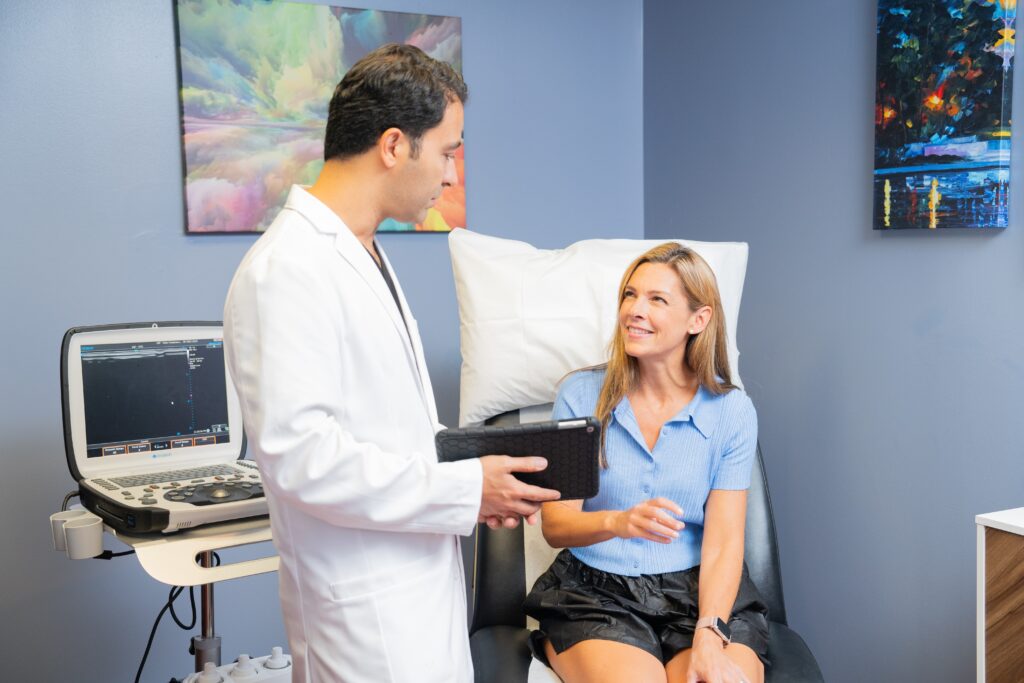
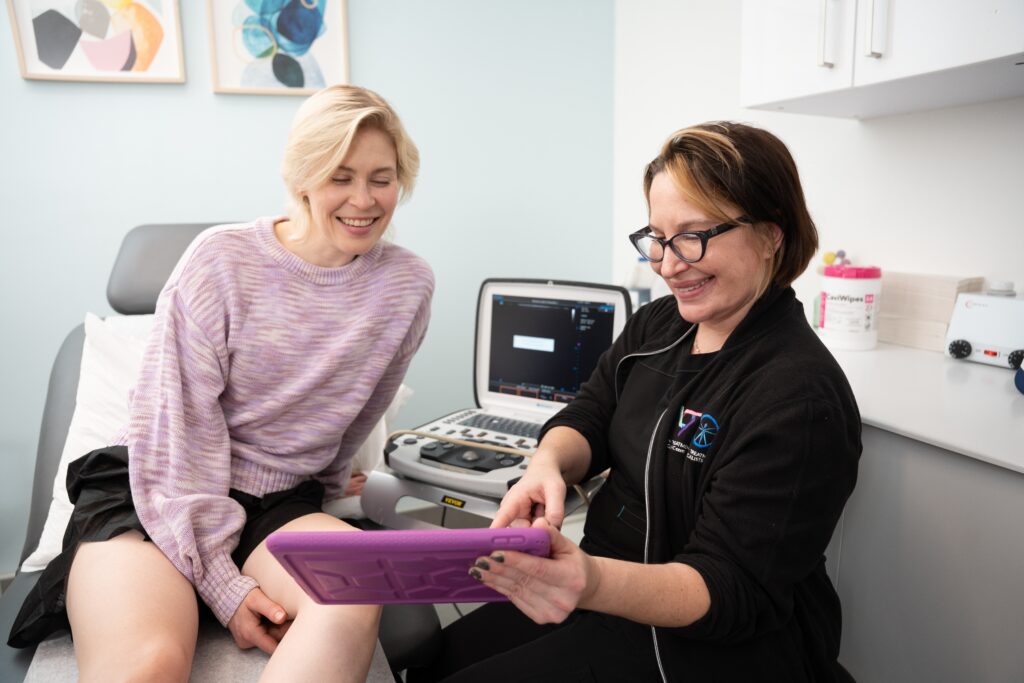
For the vast majority of patients with symptomatic venous insufficiency, the answer is yes. The evaluation and duplex ultrasound at your first appointment will confirm whether your anatomy supports non-surgical treatment (it does for most patients) and which specific procedures are best suited to your case. Our team will explain the recommended approach and why, based on your imaging findings. If you have had prior vein treatment elsewhere and are wondering whether a different approach might serve you better, we are happy to review your imaging and history and provide an independent assessment.
Frequently asked questions
Do I need to go under general anesthesia for vein treatment?
No. All standard vein procedures at our clinics use only local anesthesia. You are fully awake throughout and can communicate normally with your team. General or spinal anesthesia is not used for minimally invasive vein treatments.
Will I have scars after vein treatment?
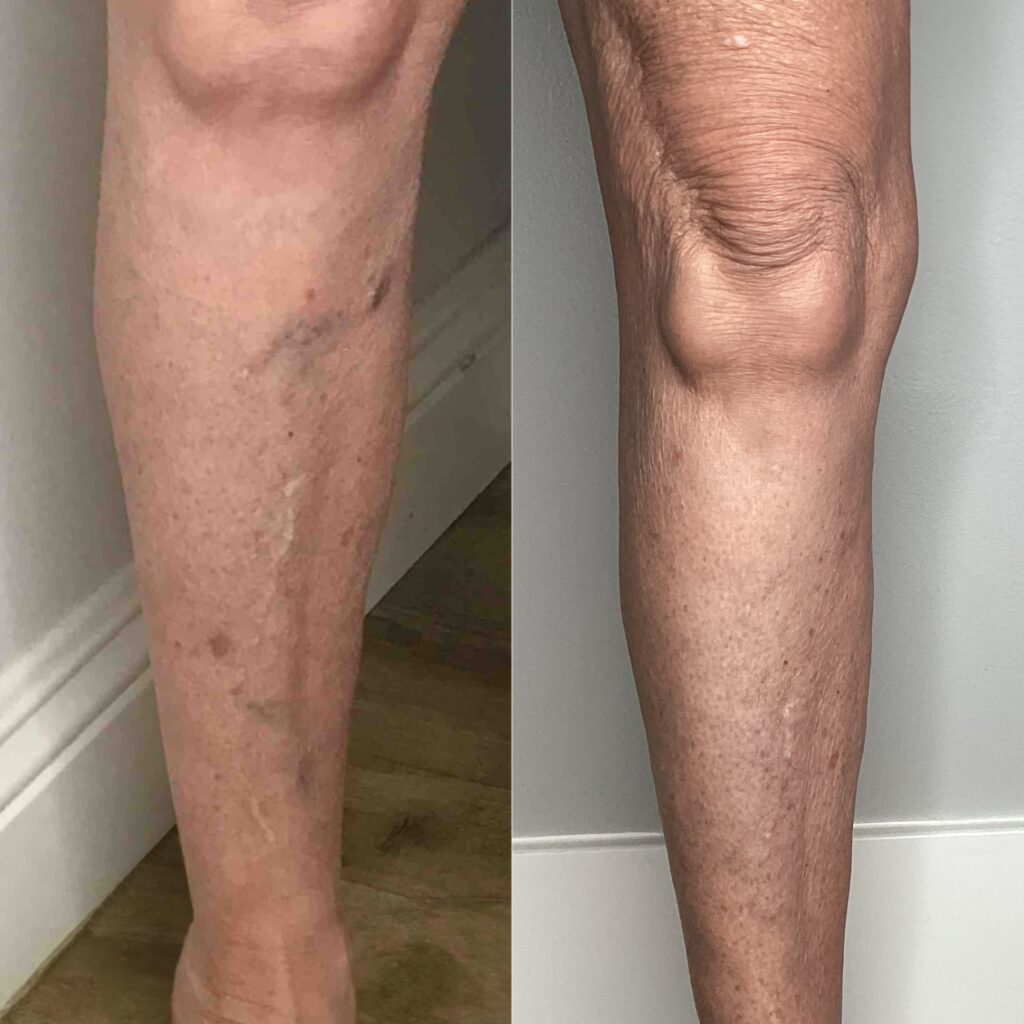
No significant scarring occurs with modern vein procedures. The entry points for catheters and needles are very small and heal without visible marks. Treated varicose veins fade and are reabsorbed by the body, leaving the overlying skin clear.
How is non-surgical treatment different from what my grandmother had done?
The historical procedure for varicose veins was surgical vein stripping, which involved physical removal of the vein through incisions under general anesthesia with significant recovery time and visible scars. Modern non-surgical procedures close the failing vein from the inside without removing it. The outcomes are equivalent or better, and the experience is dramatically less involved.
Are non-surgical procedures as effective as surgery?
Yes. Clinical studies comparing minimally invasive ablation techniques to surgical vein stripping show equivalent or better long-term outcomes for non-surgical approaches, with substantially lower complication rates and faster recovery. Minimally invasive treatment has replaced surgery as the standard of care for venous insufficiency in clinical practice guidelines.
Does non-surgical treatment close the vein permanently?
Yes. Thermal ablation procedures produce permanent fibrous closure of the treated vein. The body reabsorbs the closed vessel over several months. The treated vein does not resume function. However, new reflux can develop in other vein segments over time because the underlying genetic tendency toward valve weakness continues. Follow-up appointments at 1, 3, 6, and 12 months monitor for new disease so it can be addressed while still at an early stage.