How we work with your primary care doctor
For many patients, their primary care doctor is their first point of contact when leg symptoms become persistent. A primary care physician may notice varicose veins during a routine exam, flag leg swelling as a concern, or receive a patient inquiry about visible veins. This page explains how our team at paveinclinics.com works alongside your primary care doctor so that your vein care fits into your overall healthcare picture rather than existing in isolation.
When your primary care doctor may refer you
Primary care physicians refer patients for vein evaluation when they observe:
- Documented varicose veins or spider veins causing reported symptoms
- Persistent leg edema without a clear cardiac or renal cause
- Lower leg skin changes consistent with venous stasis
- A healed or active venous ulcer
- Patient-reported symptoms such as leg aching, heaviness, or restlessness that have not resolved with general measures
- Concern about deep vein thrombosis requiring vascular evaluation
You do not need a referral to see our team. We accept self-referred patients as well. However, when a referral is in place, your primary care doctor may have already begun the symptom documentation that supports insurance coverage, which smooths the authorization process.
How our evaluation supports your primary care team
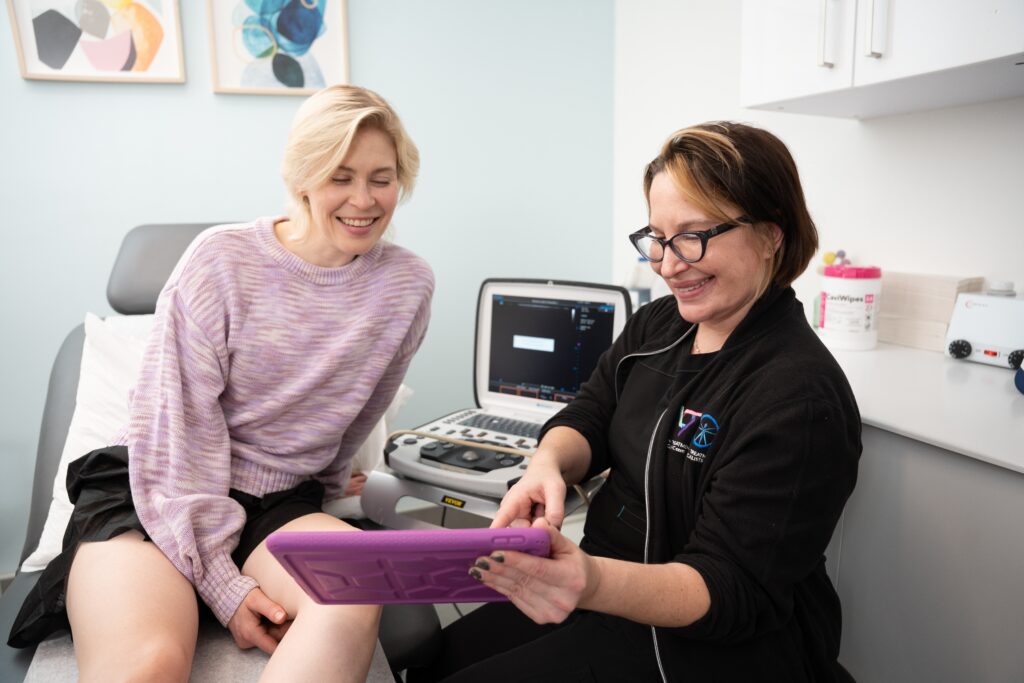
After your evaluation and duplex ultrasound, we send a comprehensive consultation note to your referring or primary care physician. This note includes a summary of your clinical history and symptoms, physical examination findings, duplex ultrasound results with details of which veins showed reflux and at what degree, CEAP classification and disease severity assessment, the recommended treatment plan and rationale, and insurance authorization status and expected treatment timeline. This communication keeps your primary care doctor informed about your vein condition and treatment plan, which matters because venous disease can intersect with other health conditions your primary doctor is managing.
When coordination between providers is particularly important
|
Clinical situation |
How coordination helps |
|
Patients with wound care needs (C5-C6 venous ulcers) |
We coordinate vein treatment and wound care so both proceed in the appropriate sequence |
|
Patients on anticoagulation (blood thinners) |
We coordinate with the managing provider on anticoagulation management around procedure scheduling |
|
Patients with peripheral arterial disease (PAD) |
PAD affects both clinical presentation and compression safety; we coordinate when arterial disease is a factor |
|
Patients with complex comorbidities |
We share findings proactively and flag any results that affect other aspects of care |
How to facilitate coordination
If you would like your primary care doctor to receive our evaluation summary, please provide their name and contact information when you schedule your appointment. We send consultation notes routinely when a referring physician is identified. If your primary care doctor has already begun documenting your symptoms or has ordered any prior imaging, bringing those records to your appointment speeds the evaluation and reduces duplication.
Whether you have been referred by your primary care doctor or are coming in on your own, our team will provide a complete evaluation and keep your other providers informed. See what your consultation involves. Learn about our insurance process and how primary care referrals can support coverage authorization. Read about our team approach to care.
How referring physicians use our consultation notes
When we send a consultation note to your referring or primary care physician, that note serves several purposes beyond a simple notification. It provides your primary care doctor with the CEAP classification and reflux findings from your duplex ultrasound, which contributes to a more accurate picture of your circulatory health overall. It documents the treatment plan and timeline so your primary care doctor knows what to expect from your upcoming appointments. And it flags any findings from our evaluation (such as deep vein findings, arterial risk indicators, or wound care needs) that intersect with conditions your primary care doctor is managing.
This communication loop is part of integrated care, not a formality. Patients who have both their primary care doctor and their vein care team working from the same clinical information experience fewer gaps, fewer duplicated tests, and more coordinated management of intersecting conditions. We send notes routinely and welcome responses from referring physicians who have questions or want to discuss a patient's care.
When to update your primary care doctor about your vein care
Beyond the initial consultation note, there are specific moments when communication with your primary care doctor matters most. If your evaluation reveals unexpected findings (such as deep system abnormalities, arterial risk indicators, or advanced skin changes that are relevant to other conditions you are managing), we communicate those findings promptly. If your treatment plan changes significantly, for example if additional phases of treatment are needed, we provide an updated summary. And if you experience any complication or unexpected finding during your treatment course, your primary care doctor is informed. This keeps your overall care team aligned and prevents any component of your care from operating in isolation from the rest.
Frequently asked questions
Does my primary care doctor need to order a duplex ultrasound before I come in?
No. Our team performs duplex ultrasound in-office during your first appointment as part of the evaluation. A prior order from your primary care doctor is not required. If your primary care doctor has already ordered an ultrasound and you have the results, bring them so we can review the imaging alongside our own scan.
Can my primary care doctor manage my vein disease instead of a specialist?
Primary care physicians can manage conservative treatment and monitor vein disease. However, the diagnostic duplex ultrasound that accurately characterizes venous insufficiency and the minimally invasive procedures used to treat it require vein specialist training and in-office equipment. Vein specialists are the appropriate providers for diagnosis, treatment planning, and procedure delivery.
Will my vein care team share information with my other doctors?
Yes, with your consent. We routinely send consultation notes to referring and primary care physicians. If you have other specialists involved in your care, we can coordinate clinical communication when that would be helpful.
My primary care doctor told me to try compression stockings for three months before being referred. Is that standard?
Some insurance plans require documented conservative treatment before authorizing vein procedures. A primary care physician advising compression stocking use may be attempting to build that documentation in advance. If your symptoms are significant or your skin shows changes, you can seek a specialist evaluation directly. Our team will advise on any insurance documentation steps needed once your plan is verified.
What should I bring from my primary care doctor to my first vein appointment?
If your primary care doctor has begun documenting your symptoms, has ordered prior imaging, or has a referral note, bring those records. Prior symptom documentation from your primary care doctor can support the insurance authorization process. If you do not have prior records, our team gathers that information directly during your first visit. Either pathway leads to the same comprehensive evaluation.