Recovery after vein treatment: what to expect
One of the most consistent things patients tell us after their first vein procedure is that recovery was easier than they expected. Modern minimally invasive vein treatment is designed for outpatient delivery and a fast return to normal activities. Understanding what is normal during recovery, what requires attention, and when results develop helps patients have realistic expectations. This guide covers the full recovery arc from the day of your procedure through your one-year follow-up.
The day of your procedure
You go home the same day as your procedure. Before leaving, you are asked to walk for 10 to 15 minutes. This activates the calf muscle pump, which supports closure of the treated vein. Compression stockings are applied before you leave and should be worn as instructed. Expect some mild bruising, swelling, and tenderness along the treated vein in the hours immediately following the procedure. The area directly over the treated vein may feel firm or cord-like to the touch, which reflects the vein reacting to treatment as it should.
Week 1: activity and care
Most patients return to desk work, light walking, and normal daily activities within 24 hours. During week one, avoid strenuous exercise and heavy lifting, hot baths, saunas, and hot tubs, extended air travel or prolonged sitting without movement, and direct sun exposure to treated areas. Continue wearing compression stockings for a period after treatment as directed by your specialist. Compression supports the treated vein walls during the healing phase and reduces the likelihood of bruising.
Weeks 2 through 4: visible changes
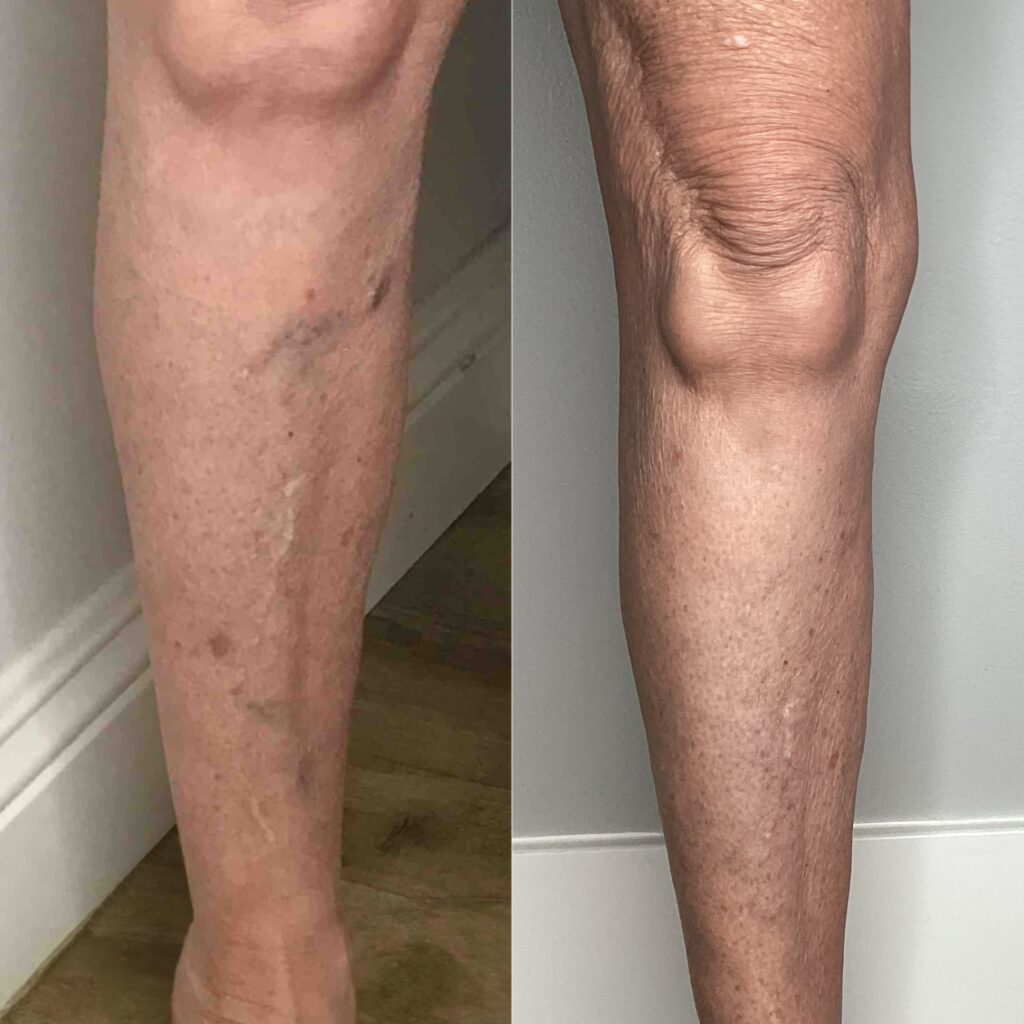
Bruising typically fades within two to three weeks. Treated varicose veins begin to shrink and become less visible as the body reabsorbs the closed vessel. Spider veins treated with sclerotherapy begin to fade and may take four to six weeks to fully resolve. Some patients notice a temporary darkening of the treated area before final fading occurs. This is a normal part of the reabsorption process.
The VeinVanish™ approach and recovery expectations
Because this personalized approach matches specific procedures to each patient's anatomy rather than applying a single approach universally, the recovery experience varies somewhat based on the procedures involved. Patients who have had ablation of a large saphenous vein may experience more bruising and firmness than patients who have had sclerotherapy for surface veins. Your team will explain the recovery expectations specific to your procedure at your pre-procedure appointment.
Follow-up appointments: 1, 3, 6, and 12 months
After vein treatment, follow-up appointments are scheduled at 1 month, 3 months, 6 months, and 12 months. These visits serve several important purposes:
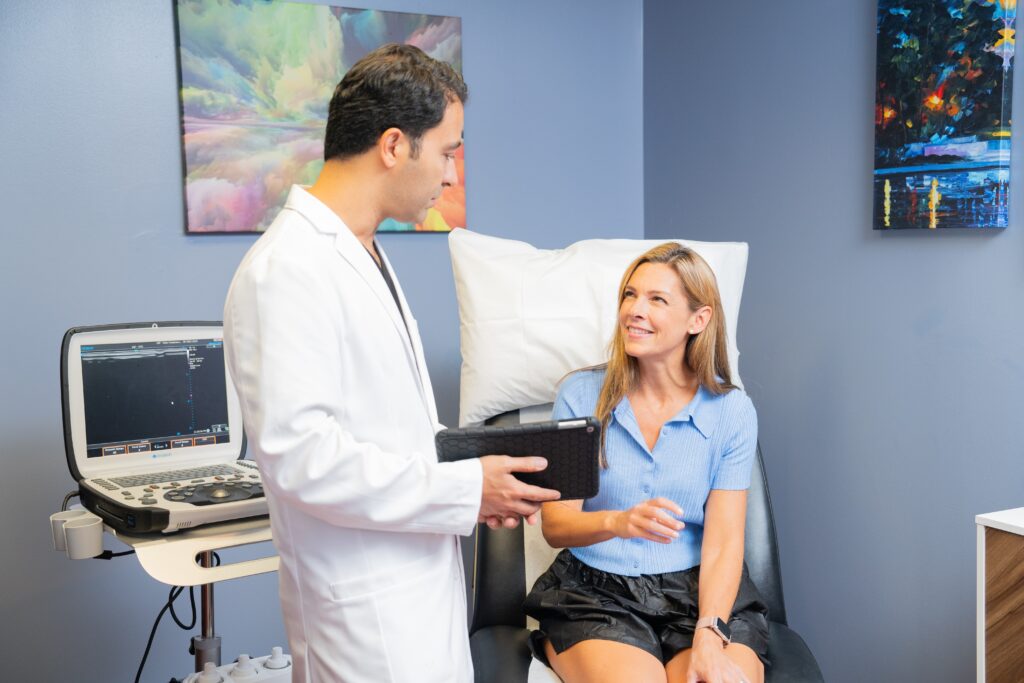
- 1-month follow-up: Confirms that treated veins are closing as expected. A duplex ultrasound is typically performed to verify closure. Residual varicose veins are assessed and additional sclerotherapy is planned if indicated.
- 3-month follow-up: Assesses treatment progress, checks for any new vessel formation, and evaluates symptom resolution. Many patients see their most significant improvement in the first three months.
- 6-month follow-up: Reviews long-term closure of treated veins and monitors skin condition. For patients with C4-stage skin changes, this is an important assessment of whether the changes are stabilizing or improving.
- 12-month follow-up: The one-year assessment establishes a baseline for long-term vein health. Any new disease identified at this point is evaluated and a plan for ongoing monitoring is established.
Staying current with these follow-up appointments is one of the most important things you can do to protect your long-term results.
What long-term results look like
Most patients experience significant and durable improvement in their symptoms after a complete course of vein treatment. Leg aching, heaviness, and swelling typically improve substantially within the first month. The visual appearance of treated varicose and spider veins continues to improve over three to six months. The treated veins are permanently closed. Recanalization, incomplete closure, or new reflux in other vein segments can develop over time, which is why follow-up appointments at 1, 3, 6, and 12 months are important.
If you are considering vein treatment and want to understand the recovery process before you begin, our team will walk you through your individual procedure expectations at your consultation. Schedule your consultation with our Pennsylvania team. Learn about compression stockings and how to prepare for your procedure.
What is normal versus concerning during recovery
Mild bruising, a cord-like firmness along the treated vein, mild aching in the treated leg, and temporary skin discoloration are all expected parts of healing. Significant increase in swelling, a rapidly enlarging mass, fever, or new persistent numbness warrants a call to our team.
One of the most common sources of post-procedure worry is uncertainty about whether a specific finding is expected or concerning. As a general guide: mild bruising, a cord-like firmness along the treated vein, mild aching in the treated leg for the first several days, and temporary skin discoloration over the treated area are all expected parts of the healing process. These findings reflect the vein responding to treatment as intended. They typically resolve gradually over days to weeks without any intervention needed.
Contact our team if you experience significant increase in swelling or redness beyond expected bruising, a rapidly enlarging firm mass in the treated area, fever, or any numbness or tingling that is new and persists beyond the first few hours. These are uncommon but warrant a prompt conversation with our team so we can assess what is happening and advise on whether you need to be seen.
Frequently asked questions
When will I see results from vein treatment?
Symptom relief (reduced aching, heaviness, and swelling) often begins within the first few weeks and continues to improve over one to three months. Visual improvement in treated varicose veins develops over two to six months as the body reabsorbs the closed vessels. Spider vein fading after sclerotherapy typically takes four to eight weeks per session.
What does the firmness or cord-like feeling after treatment mean?
A firm, cord-like sensation along a treated vein is a normal part of the healing process. It reflects the vein wall undergoing fibrosis as the body closes and reabsorbs the treated vessel. This feeling typically resolves gradually over several weeks to months.
When can I return to the gym after vein treatment?
Light walking is encouraged immediately. Most patients return to regular exercise within two to four weeks, depending on the procedure type. High-impact activities and heavy lifting are the last to resume, typically after two to three weeks. Your specialist will give you specific guidance at your post-procedure appointment.
What if my symptoms do not improve after treatment?
Some patients require more than one treatment session to achieve full symptom relief. Your follow-up appointments include re-evaluation and planning for additional treatment if needed. If symptoms are not improving as expected, contact our team so the situation can be assessed before your next scheduled follow-up.
When can I fly after vein treatment?
Air travel lasting more than three to four hours in the first two weeks after vein procedures is generally not recommended without specific guidance from your specialist. Prolonged immobility in a pressurized cabin is a known risk period for venous pooling. If travel is necessary shortly after your procedure, discuss timing and compression stocking use with our team before your procedure date.